
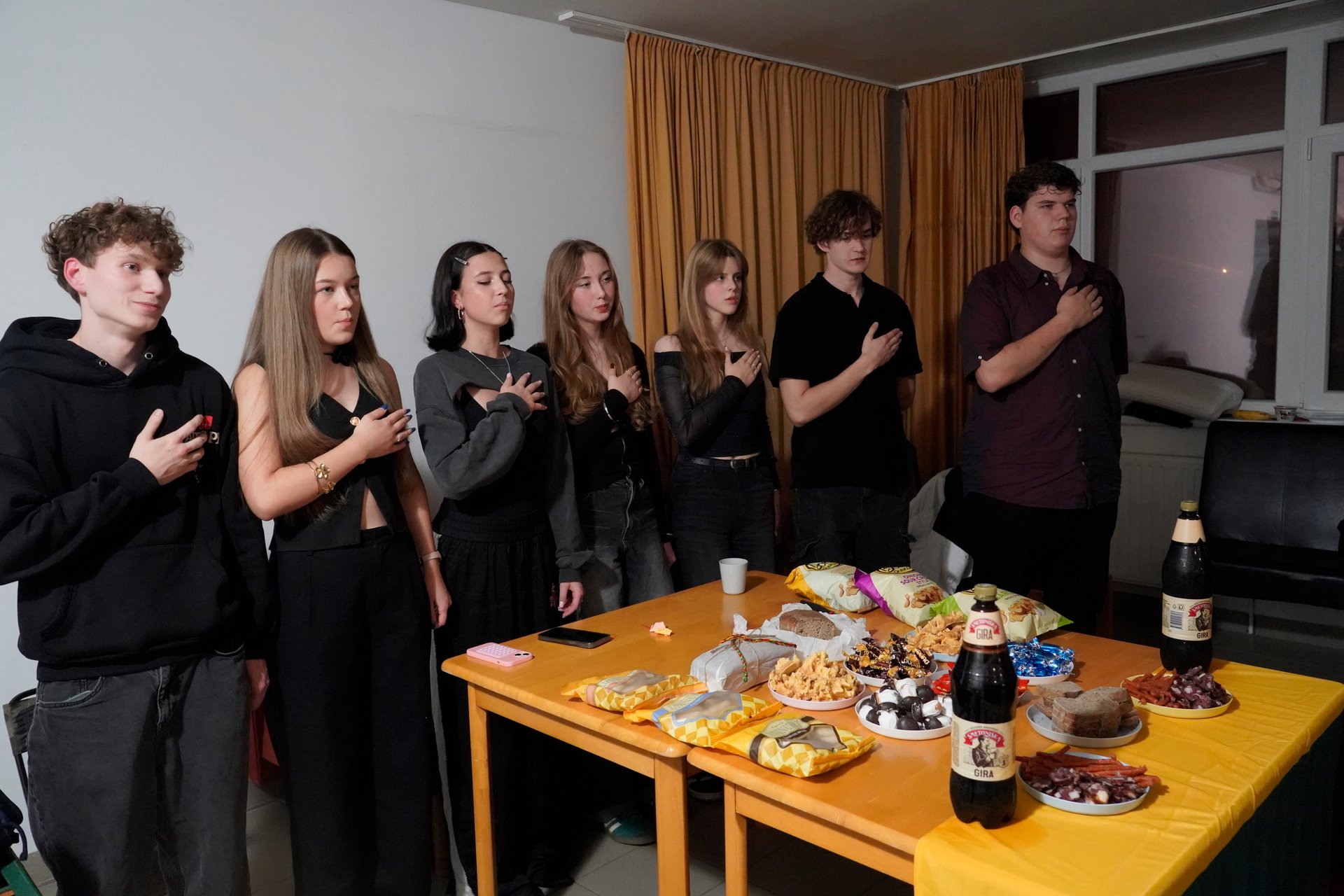
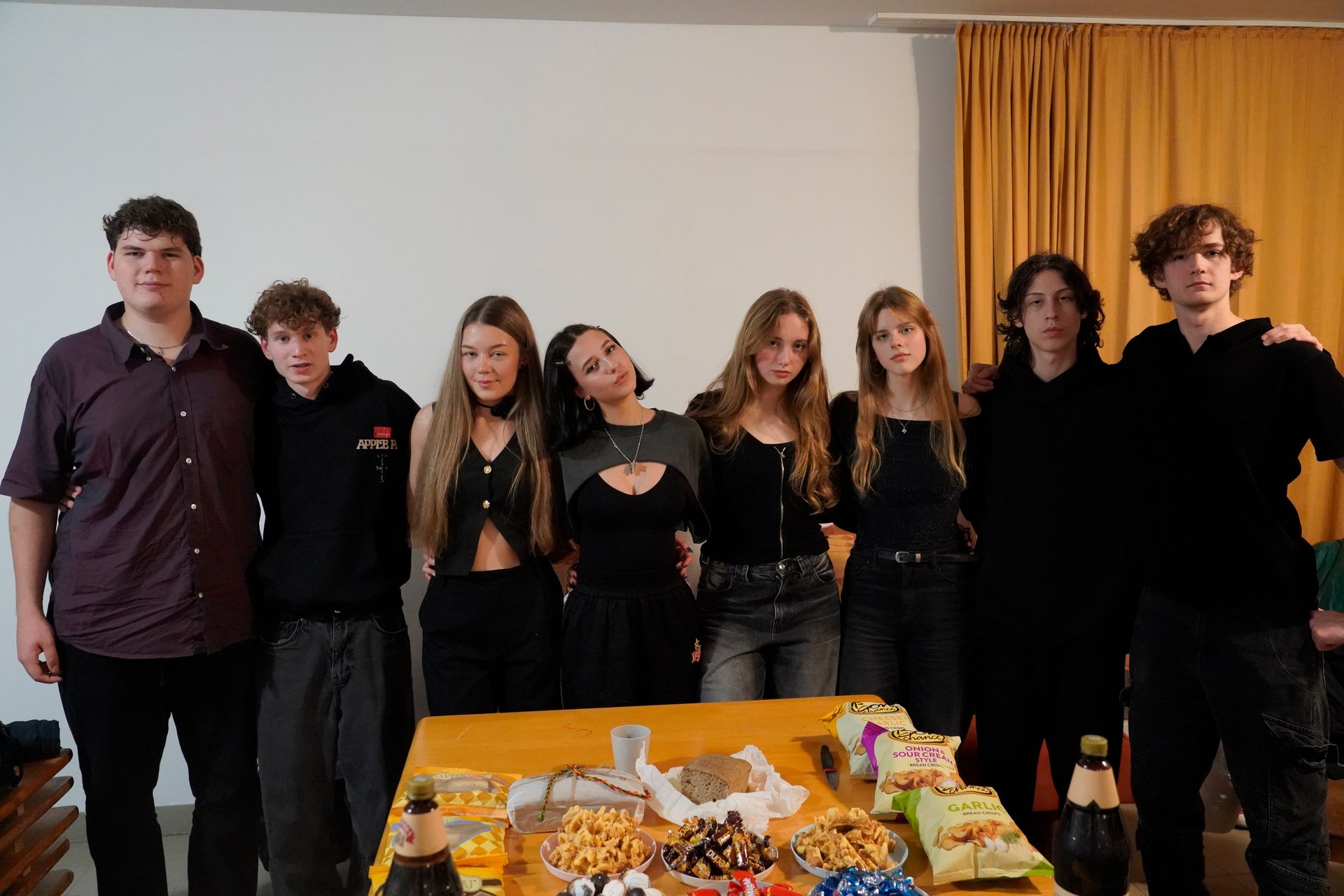
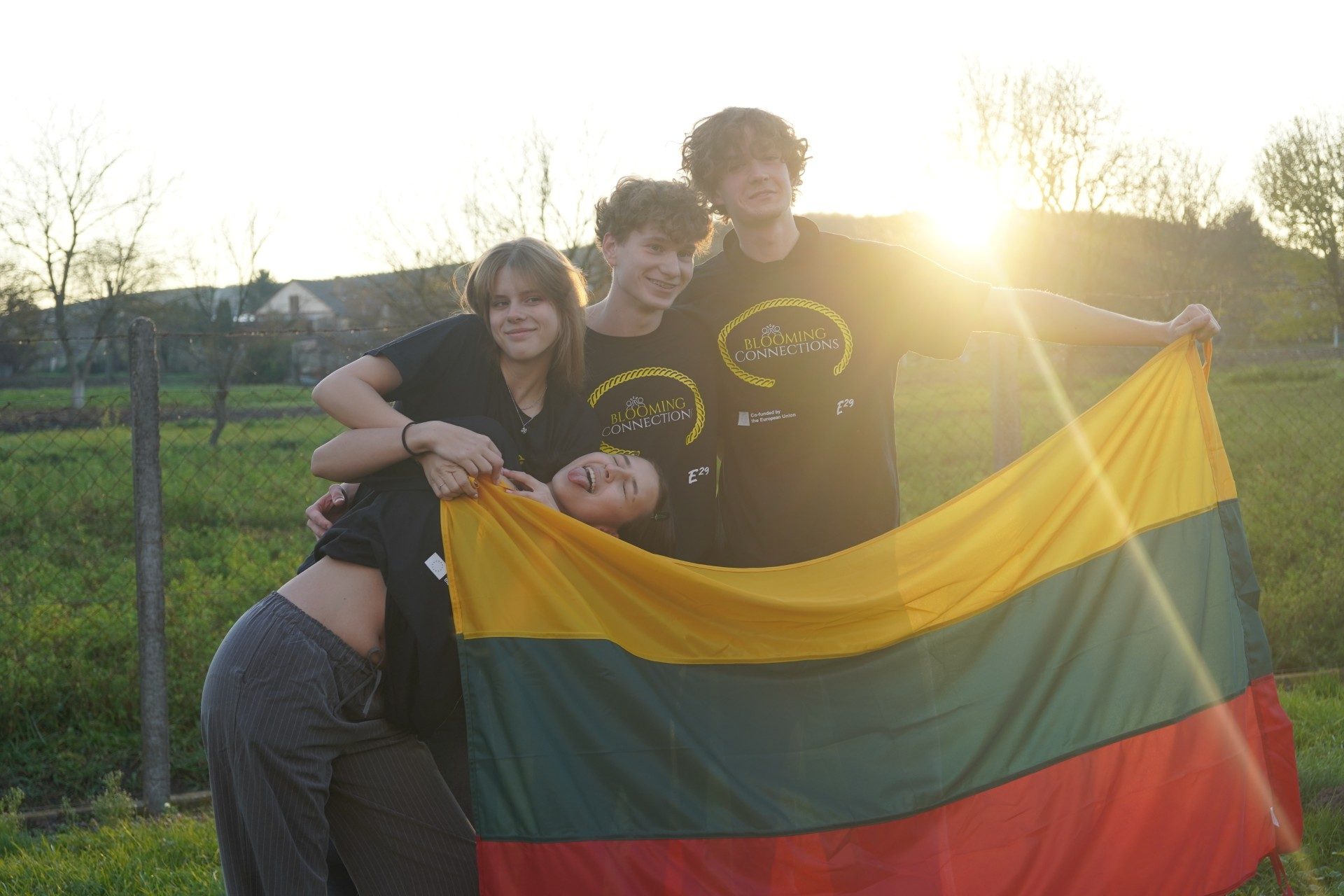
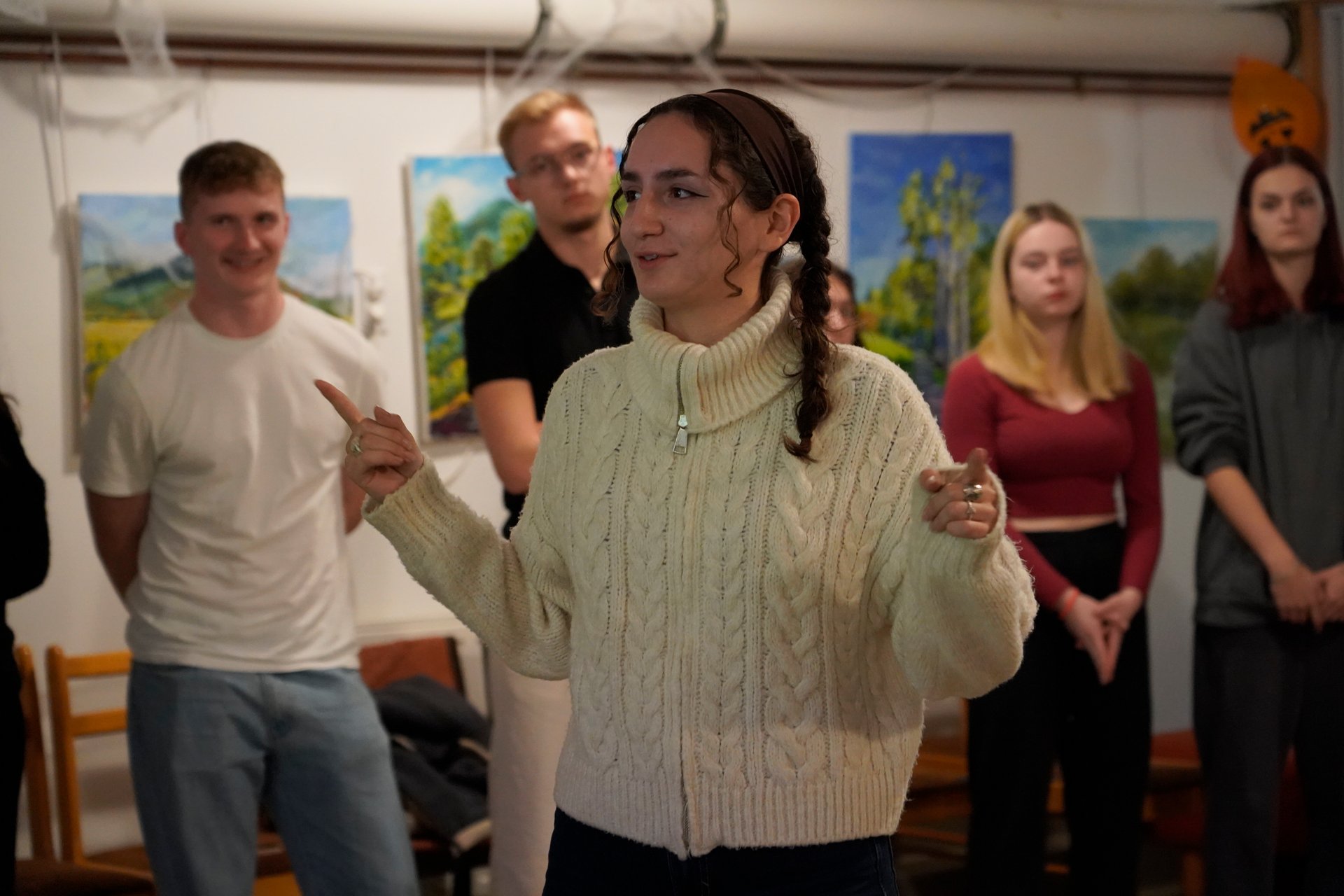
On the third evening in Bodrogkeresztúr, Hungary, it was our participants’ turn to stand up in front of six other countries and show them Lithuania. Blooming Connections, the youth exchange that brought them there, had barely started. Names were still being mixed up. And yet there they were, running the first intercultural night of the exchange, presenting a country most of the room had never visited to people they had met days before.
That evening set the tone for what Keliauk Kad Keistum’s participants remember about these ten days. The exchange was about social well-being, the way relationships and community keep us healthy, and the sessions were full and well built. But ask our team what the theme actually felt like, and they point at the spaces between the sessions.
The Evening We Hosted
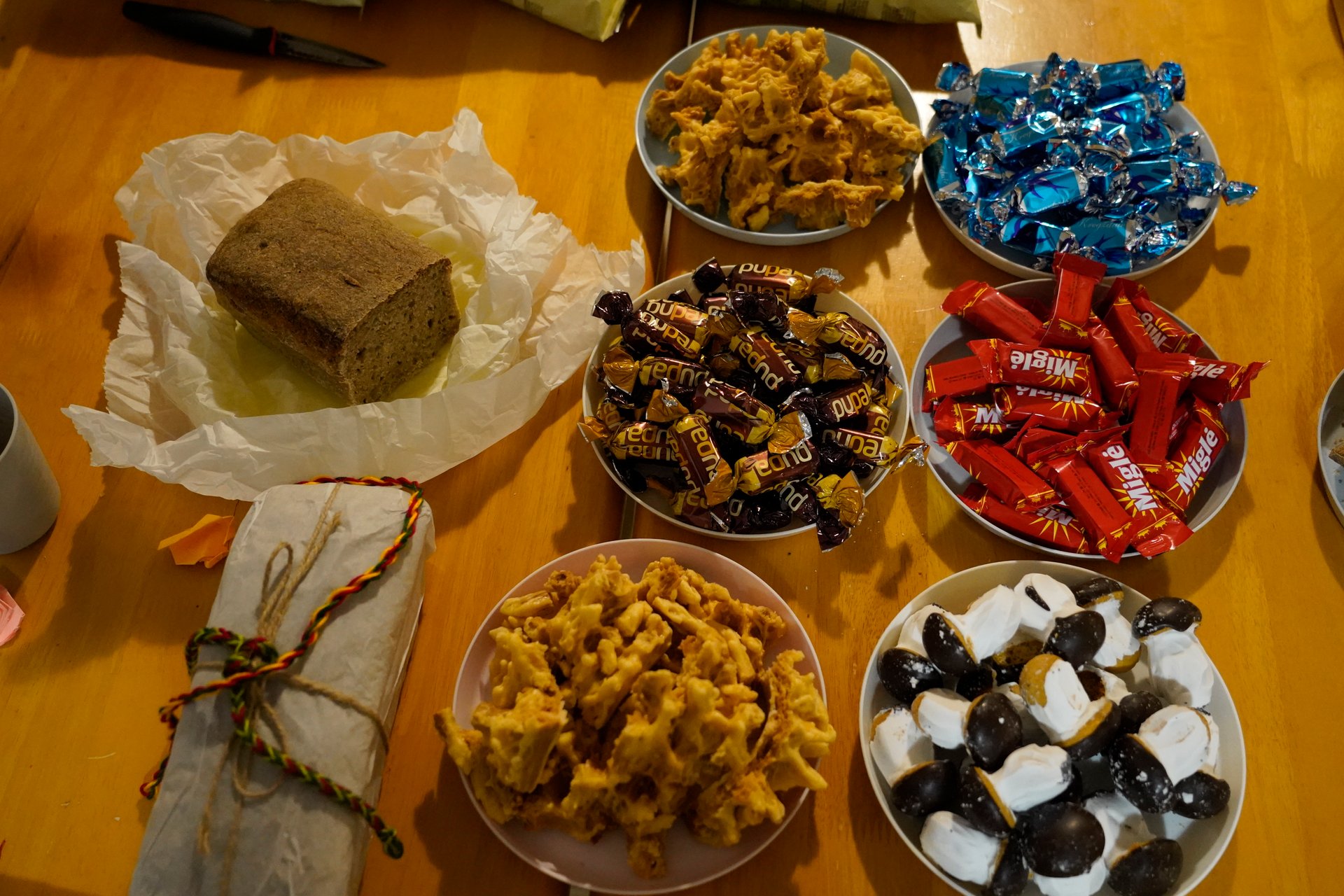
Going first with an intercultural night is its own kind of icebreaker. Our participants introduced Lithuania through food, music, and games to a room that was still sorting out who was who, and by the end of the evening they were no longer the Lithuanian group; they were the ones who had hosted everyone. For young people representing their country abroad, often for the first time, standing behind a table of things from home while six other countries ask questions is a small, real act of confidence.
The nights kept rotating through the exchange, country by country, and each one raised the bar a little. Having opened the series, our team got to spend the rest of them as guests.
Mornings on the Grass
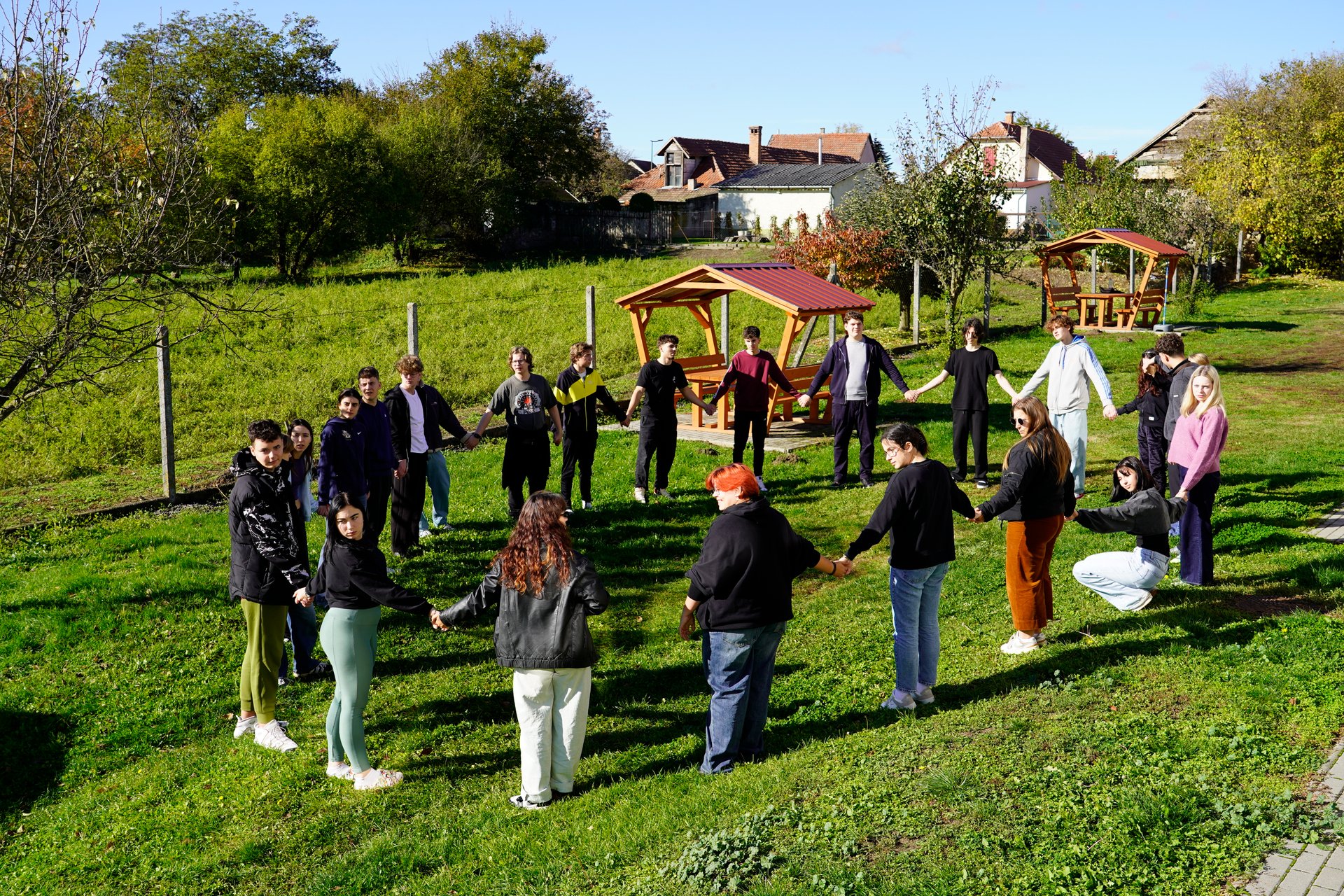
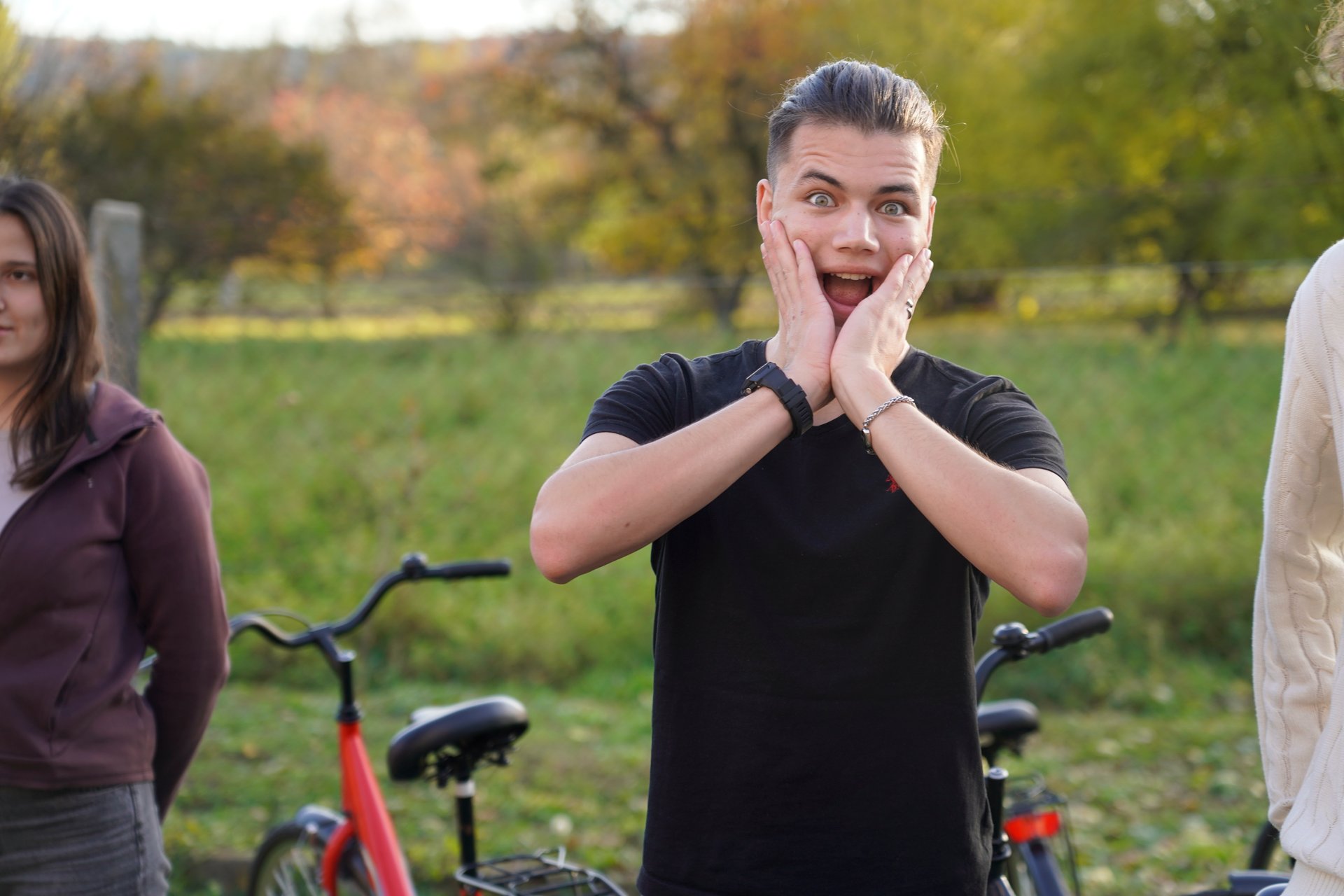
Every day began before the programme did. Energiser teams, rotating between national groups, pulled everyone out into a circle on the grass to shake off the morning, and a recall team followed with a playful summary of the previous day. In the golden autumn light of the Tokaj hills, with the group stretching and laughing before the first session, the theme of the exchange was already in motion an hour before anyone said the word well-being.
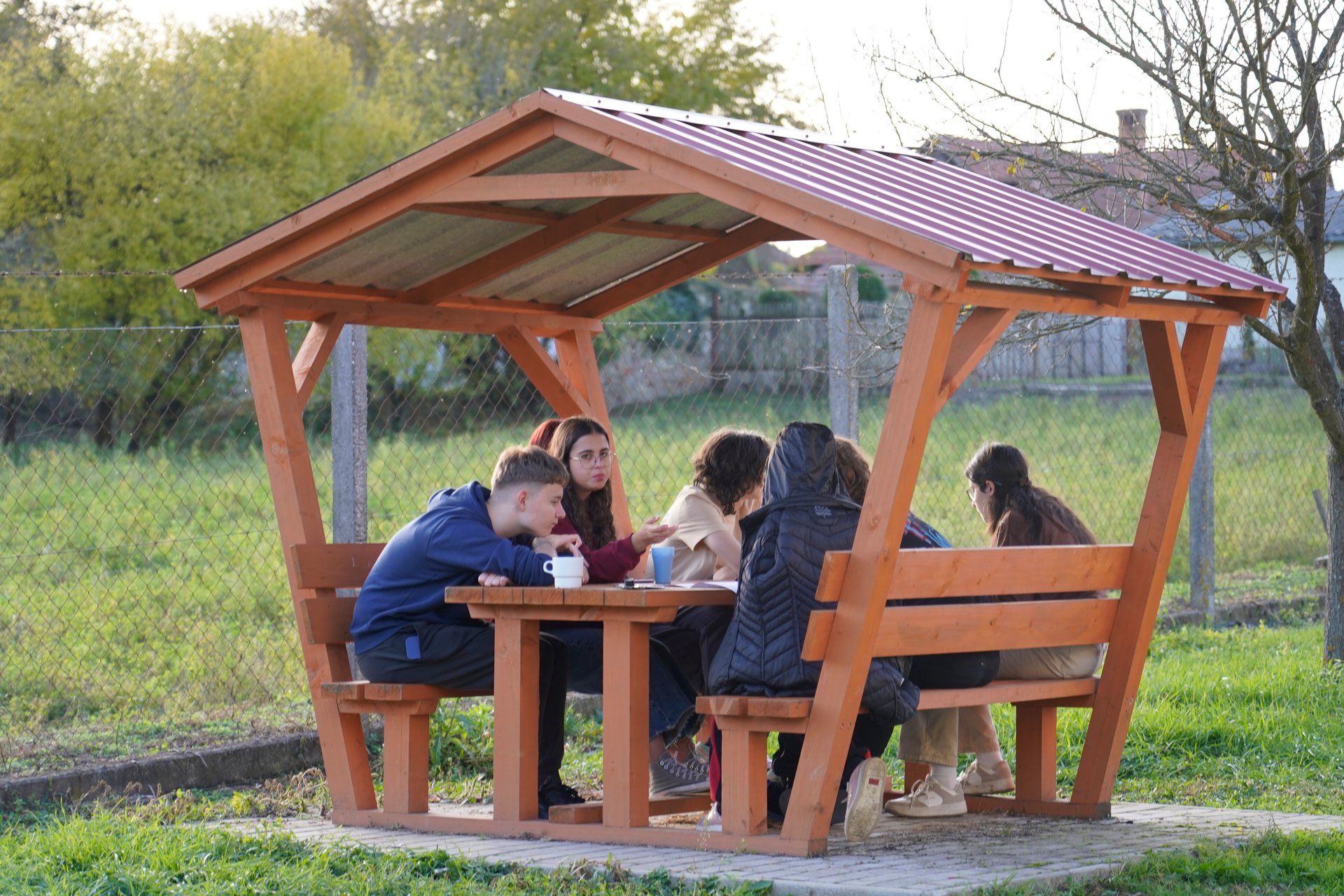
The wooden gazebo in the garden did similar quiet work. Officially it was a spot for small-group tasks. Unofficially it was where conversations went when they outgrew the session that started them.
The Work, Honestly Earned
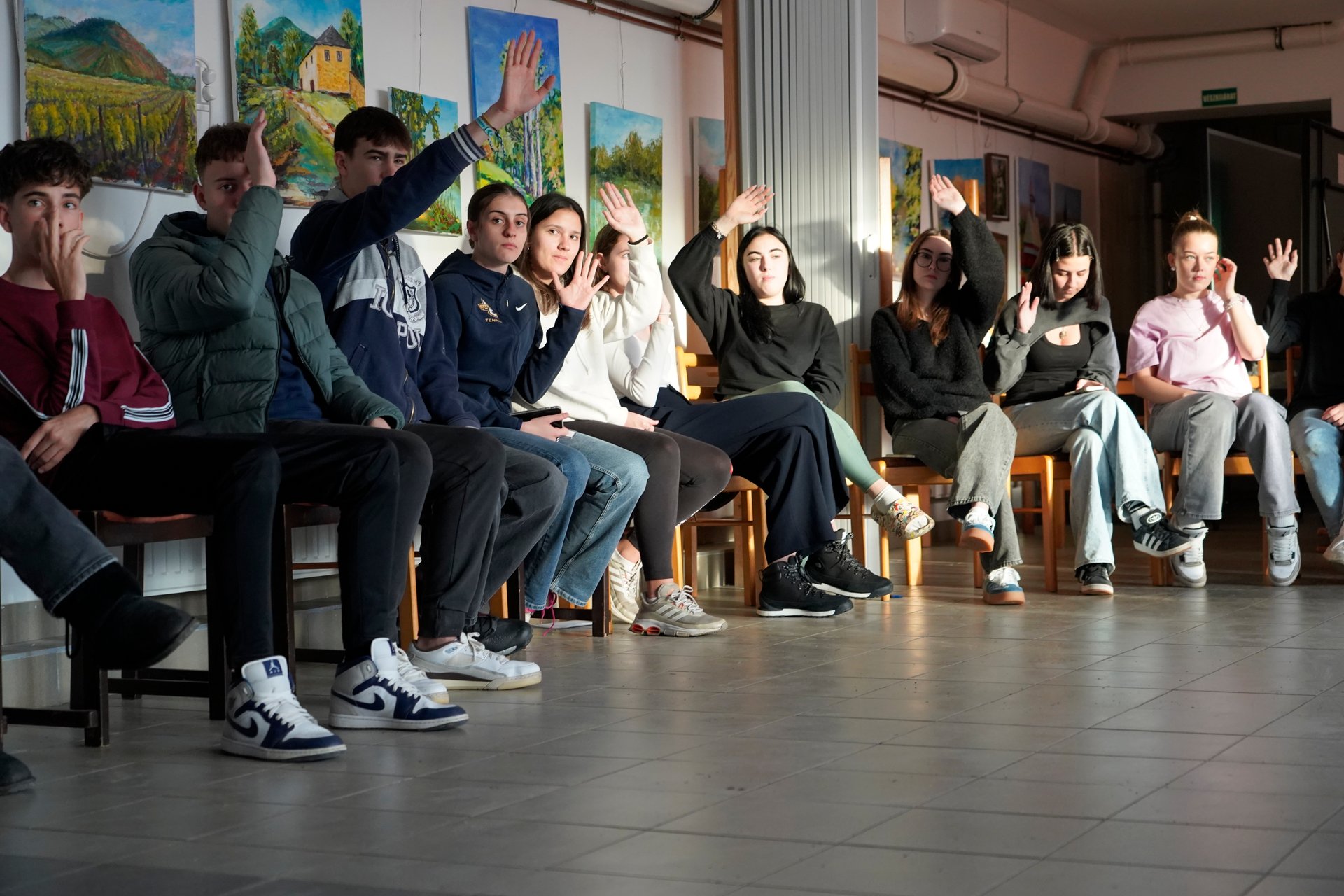
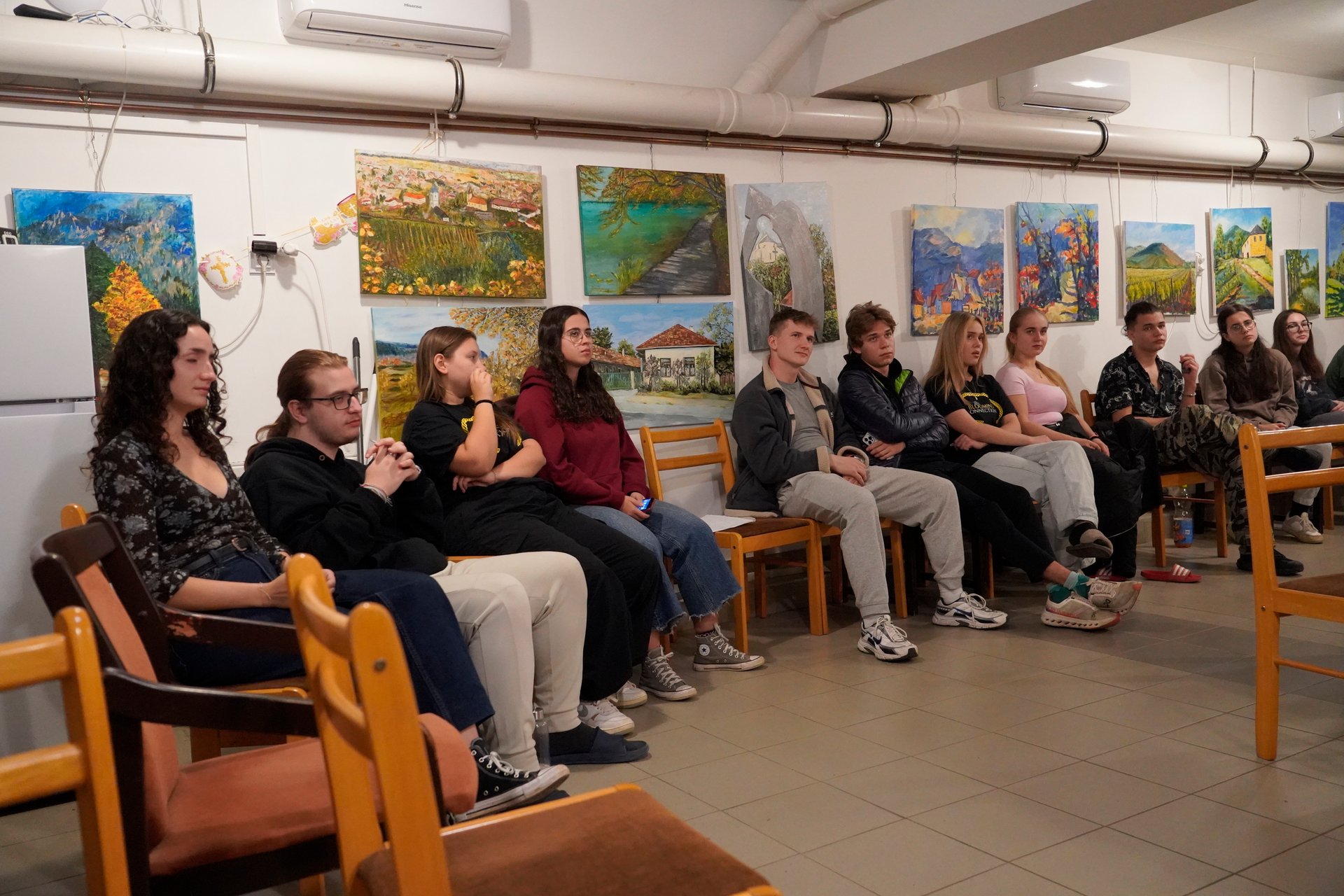
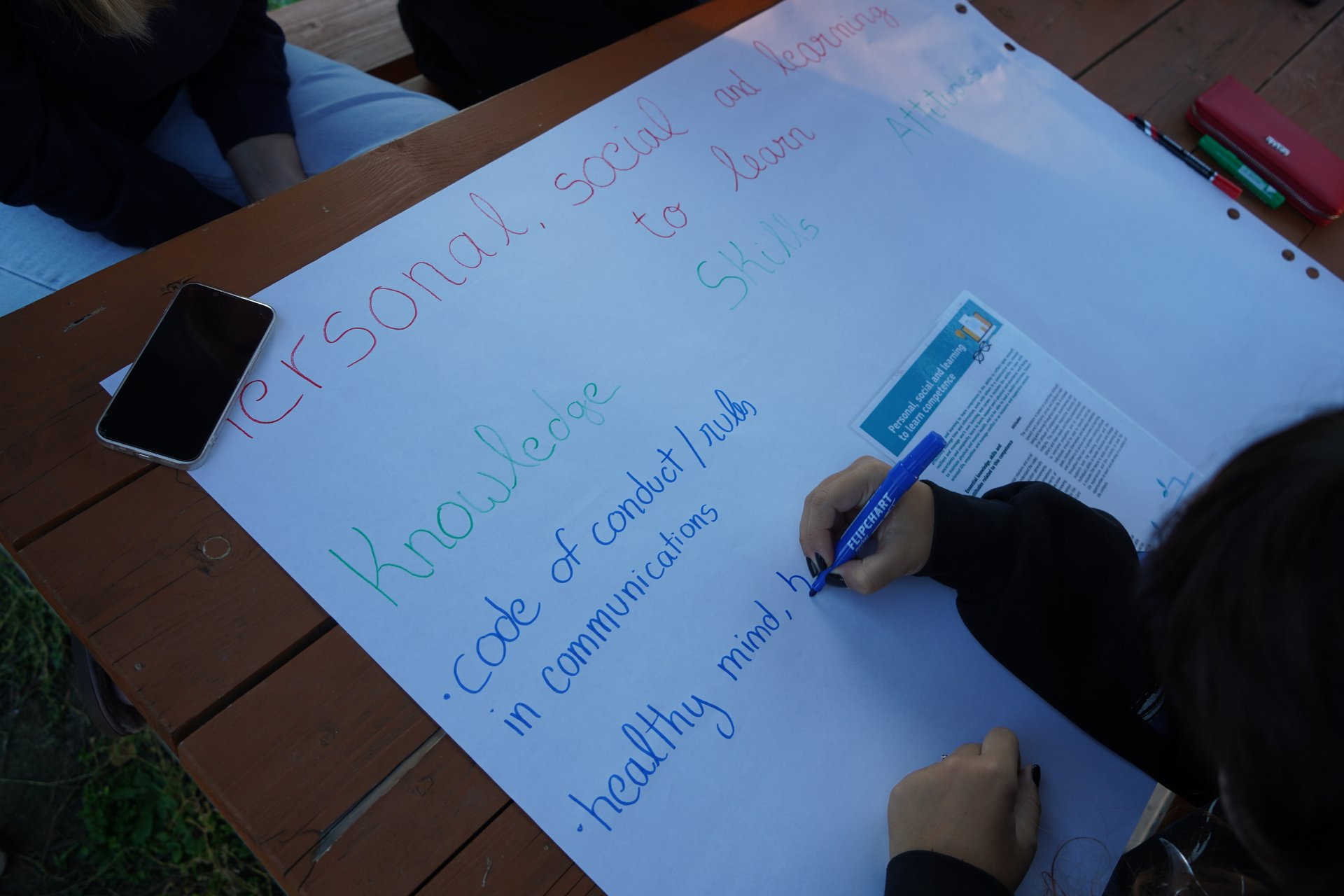
None of this floated free of the programme. Our participants worked through the full arc of it: a Challenge Quest in the first days that sent mixed international teams racing through twenty tasks with a camera, sessions that built a shared definition of well-being and broke it into mental, physical, and social sides, a stretch of practice on the social side in particular, and a final push of planning what to do with all of it at home. One morning session had teams filming one-minute reels of morning routines that support well-being, which is why several phones in our group still hold cinematic footage of people brushing their teeth.
The work was real and the days were long. That is exactly why the in-between moments mattered: the programme was designed to be demanding, and the group culture caught everyone who wobbled.
The Party in the Middle
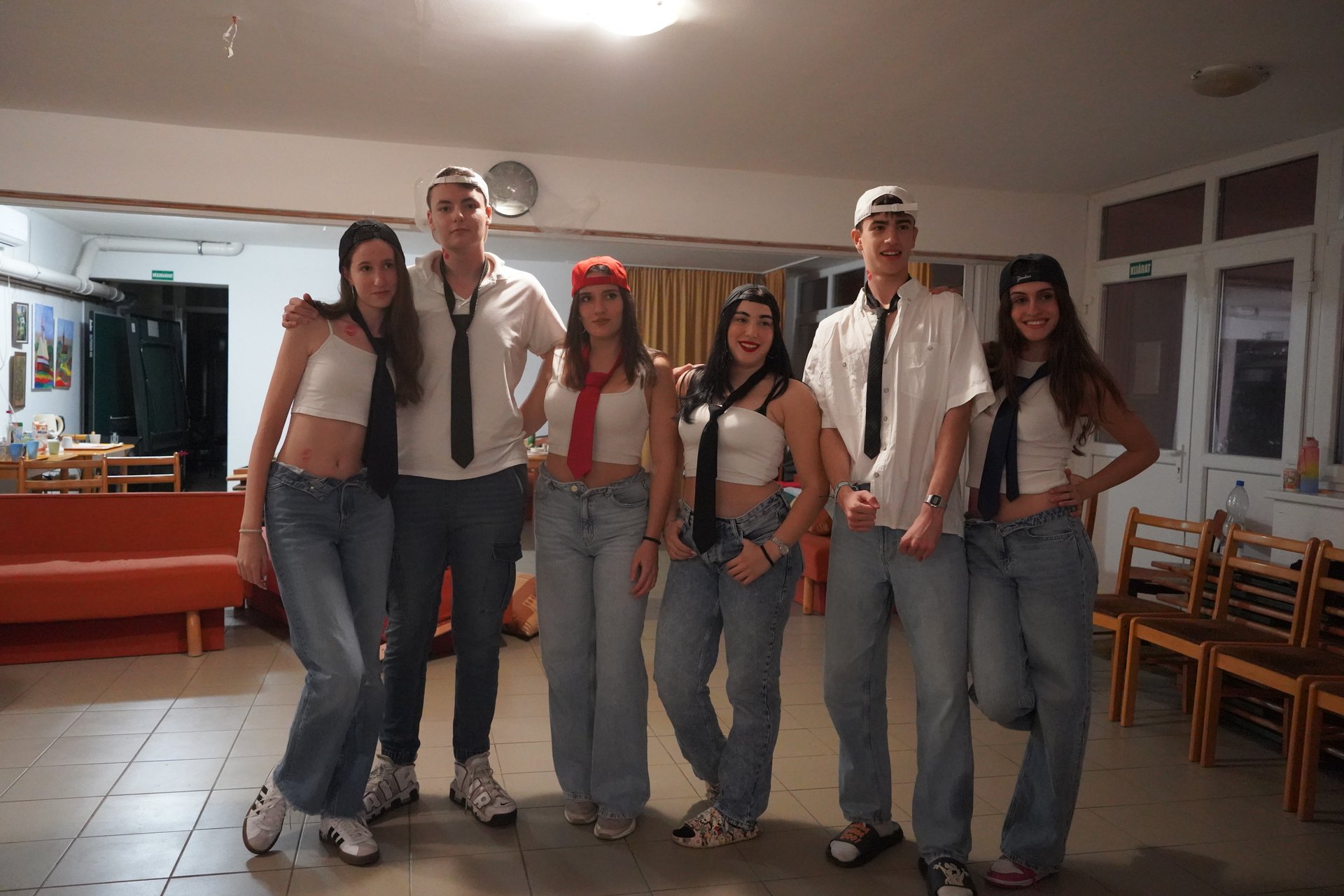
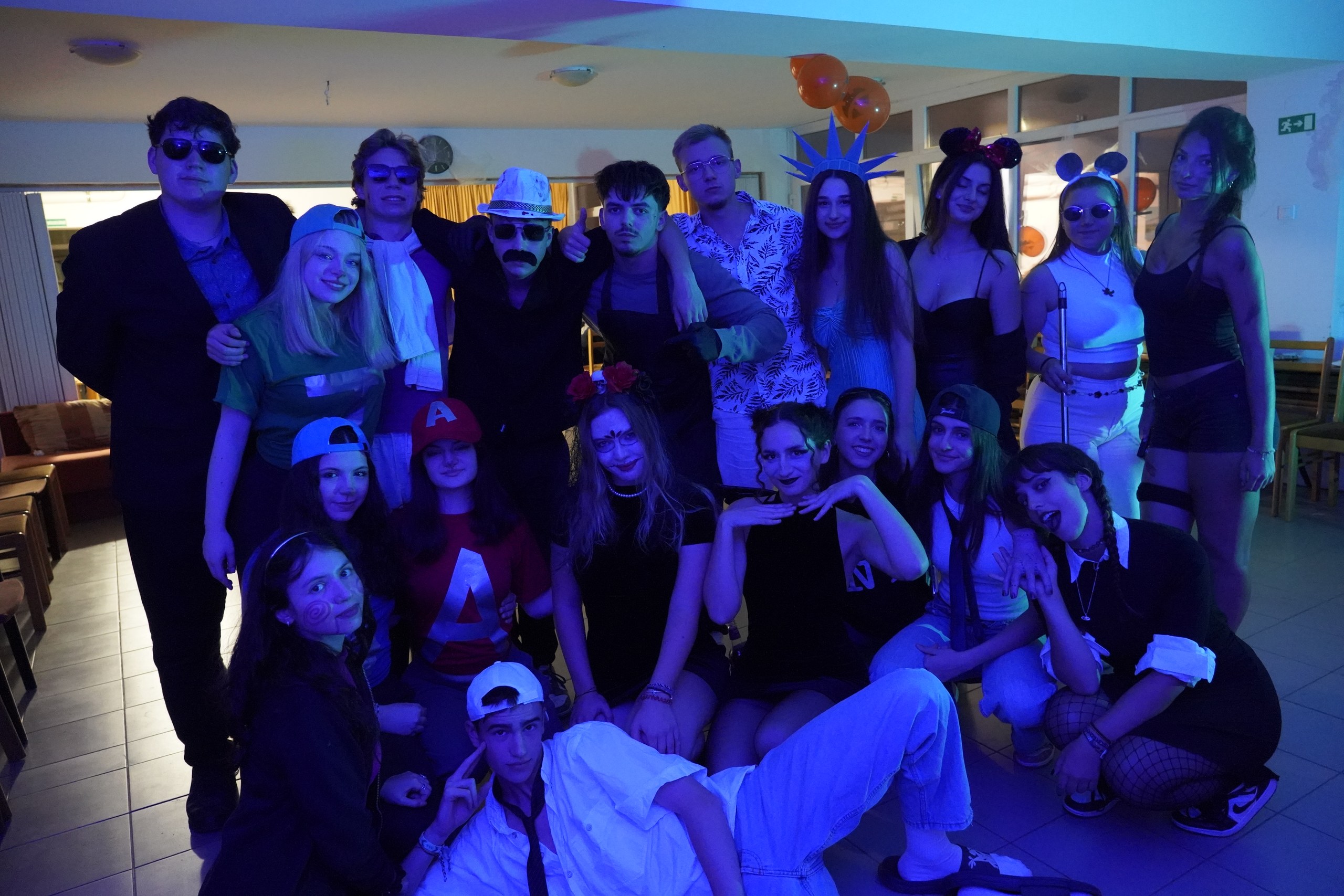
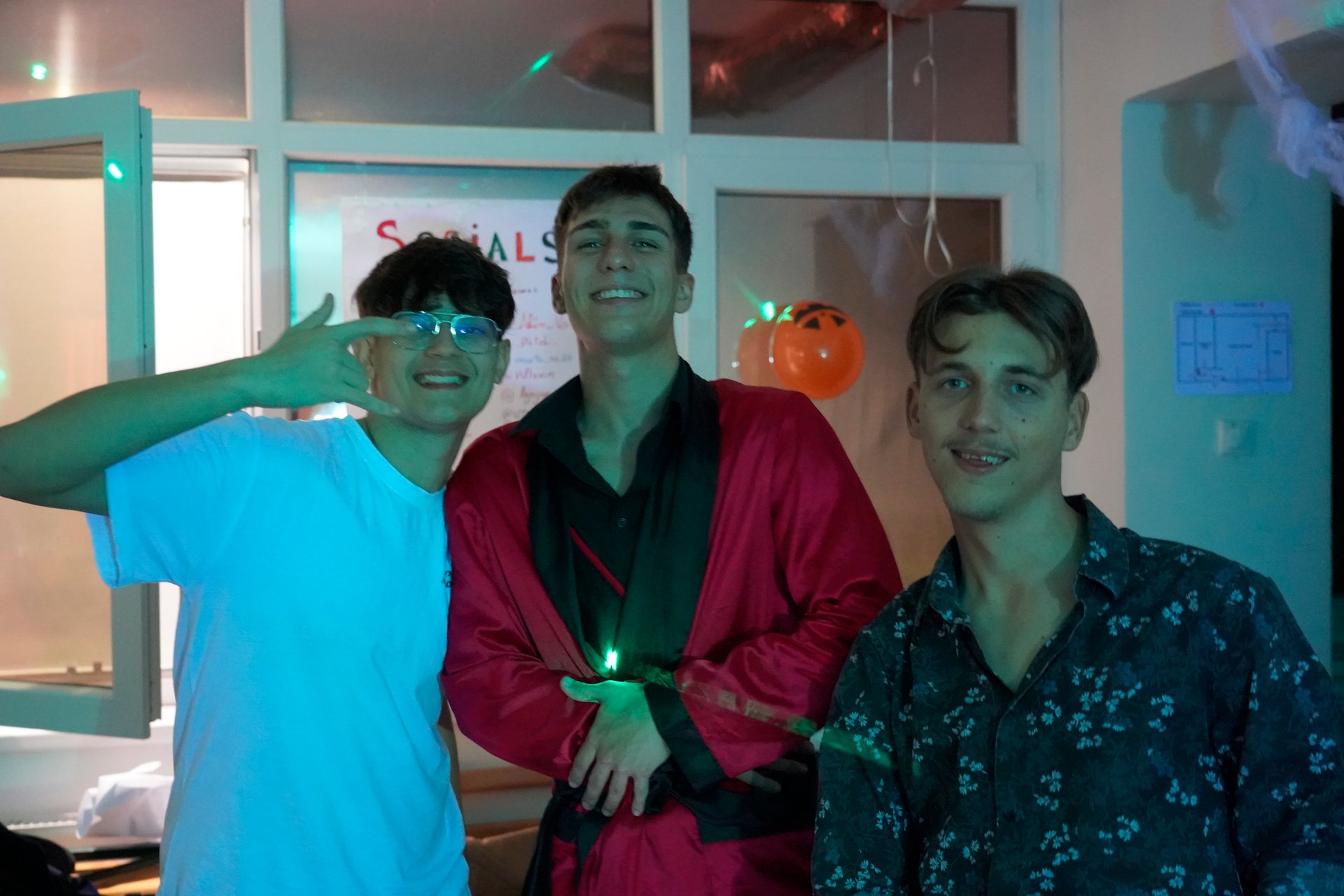
Mid-exchange, the common room stopped being a session space for a night. The group threw its own Halloween party, costumes and decorations included. Our participants had spent the day working on well-being in structured sessions; they spent the evening dancing in a blue-lit room with people from six other countries. Both halves belong in the same story. The sessions gave the group its ideas about connection; the evenings were where the group put them into practice without noticing.
Looking Out for Someone
The longest thread of the exchange was invisible for most of it. On the first day, everyone drew a name: a Secret Friend to quietly look out for across the whole exchange, without being caught. A compliment box collected anonymous notes of appreciation that were read aloud in the evenings. Every participant knew two things: someone in this group is looking out for me, and I have someone to look out for.
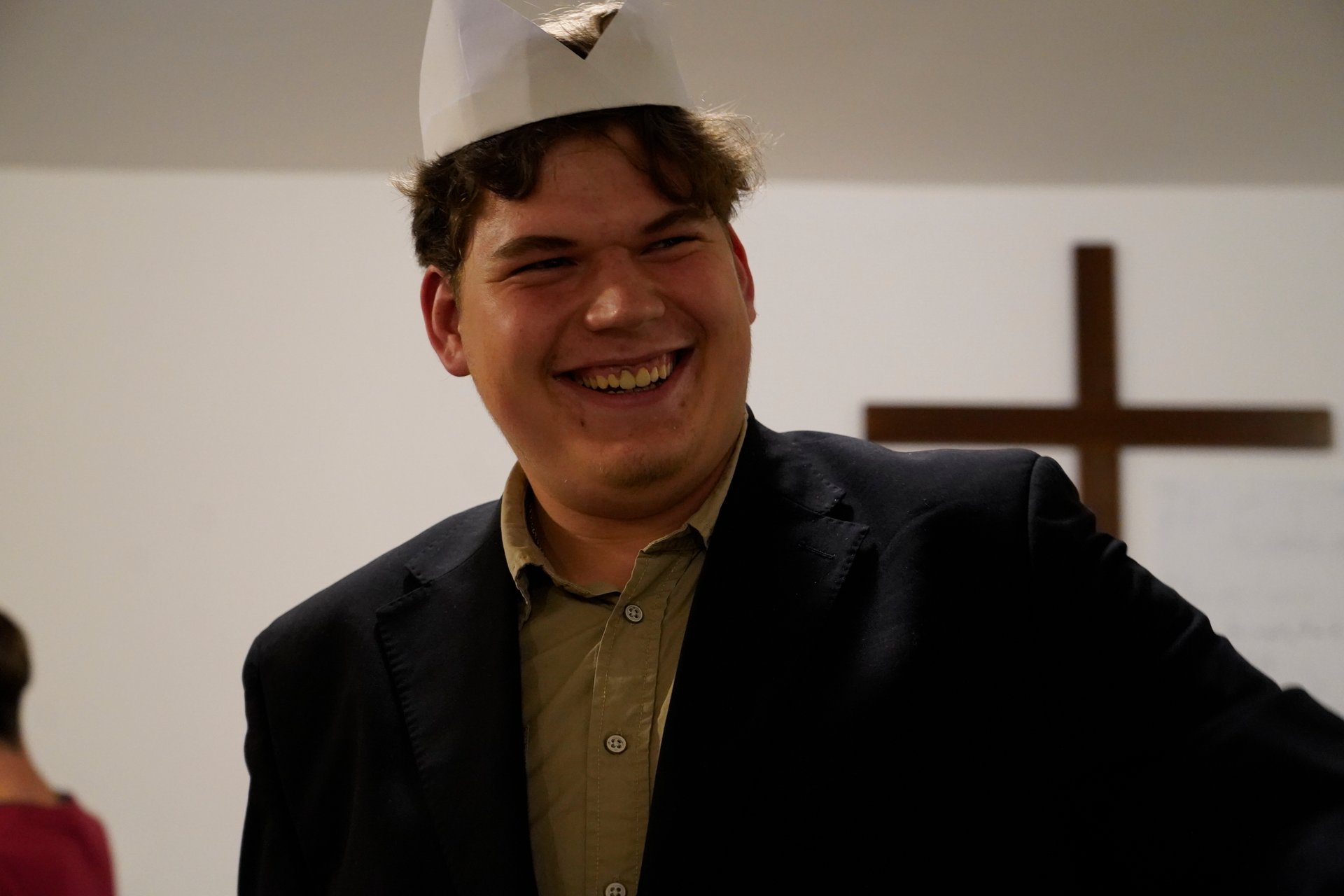
The reveal came on the final evening. Eyes closed, waiting, until your Secret Friend found you and hugged you. Our participants came home with a very practical understanding of social well-being from that game alone: it is what happens to a group of strangers when every single one of them is quietly responsible for someone else.
What Came Home to Lithuania
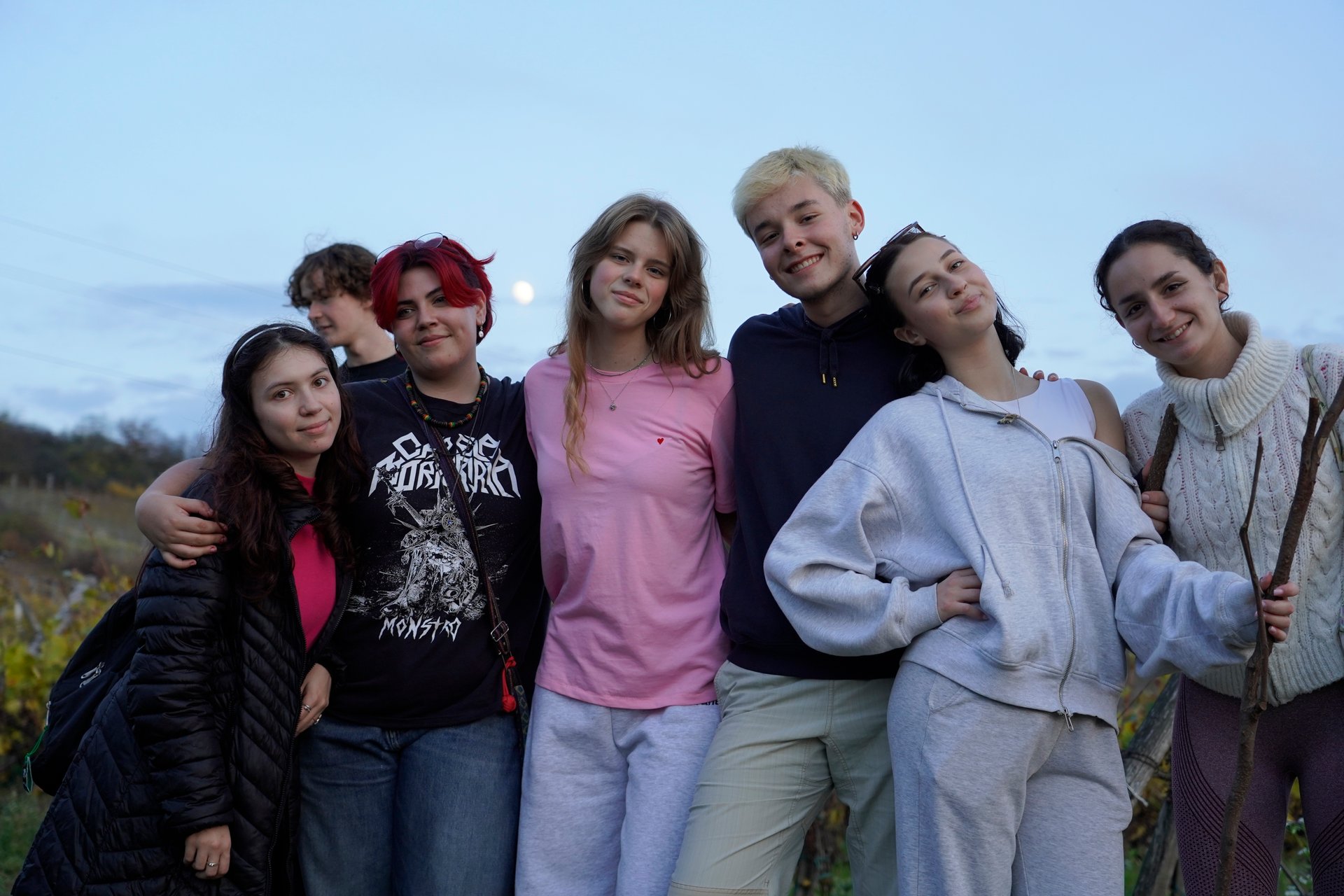
Erasmus+, the European Union’s youth-mobility programme, co-funded the exchange as part of Four Links’ Accreditation. Our participants came back across Lithuania with the things these projects reliably give: better English, new friends in six countries, a Youthpass naming real competences. But the thing they describe first is smaller and harder to put on a certificate. They lived inside a community deliberately built to care for its members, and they watched it work. A young person who has seen that once knows it can be built again, at school, in a club, in a small town, anywhere there are people willing to draw a name and look out for it.
Photo Gallery
A few more moments from this activity :)
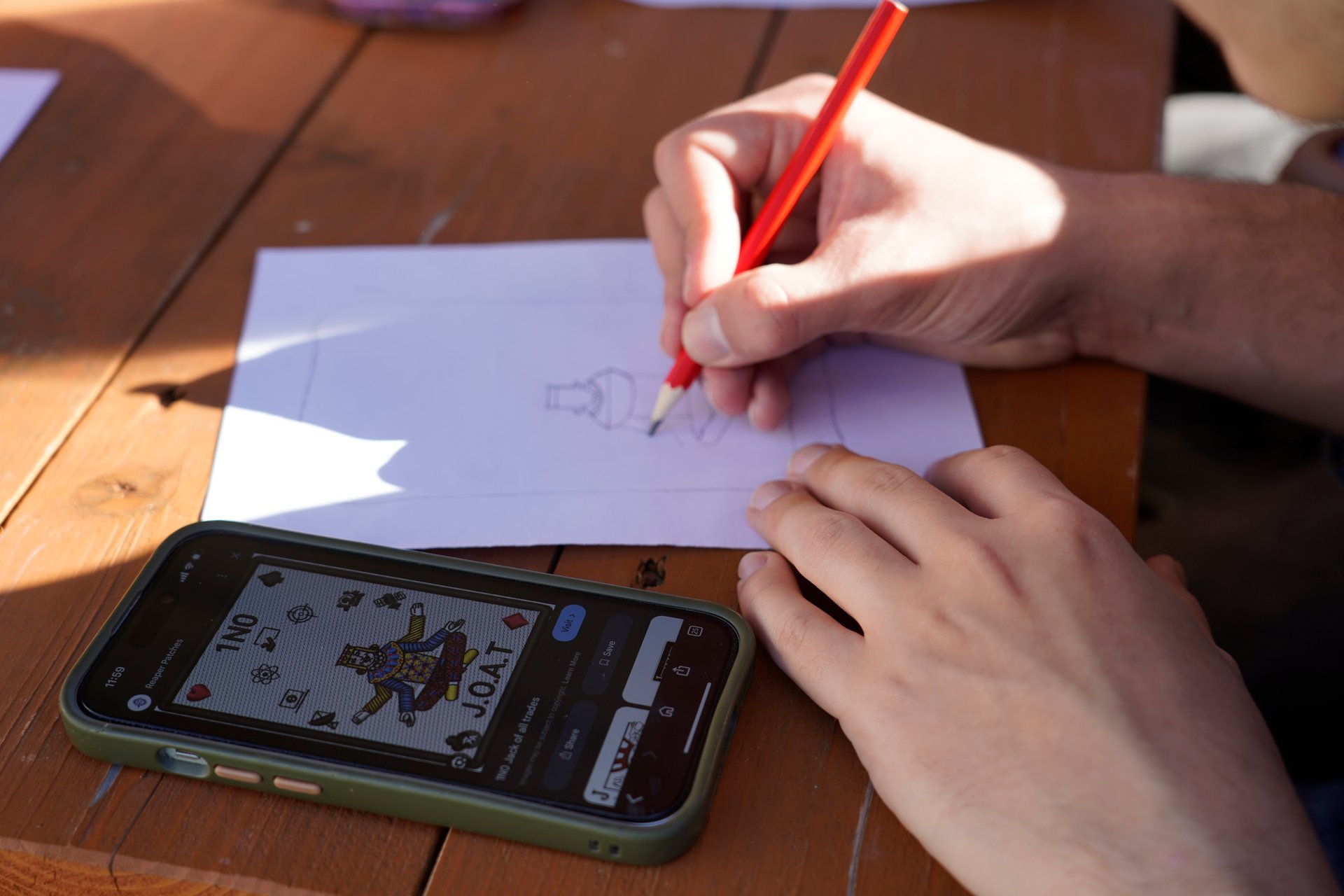
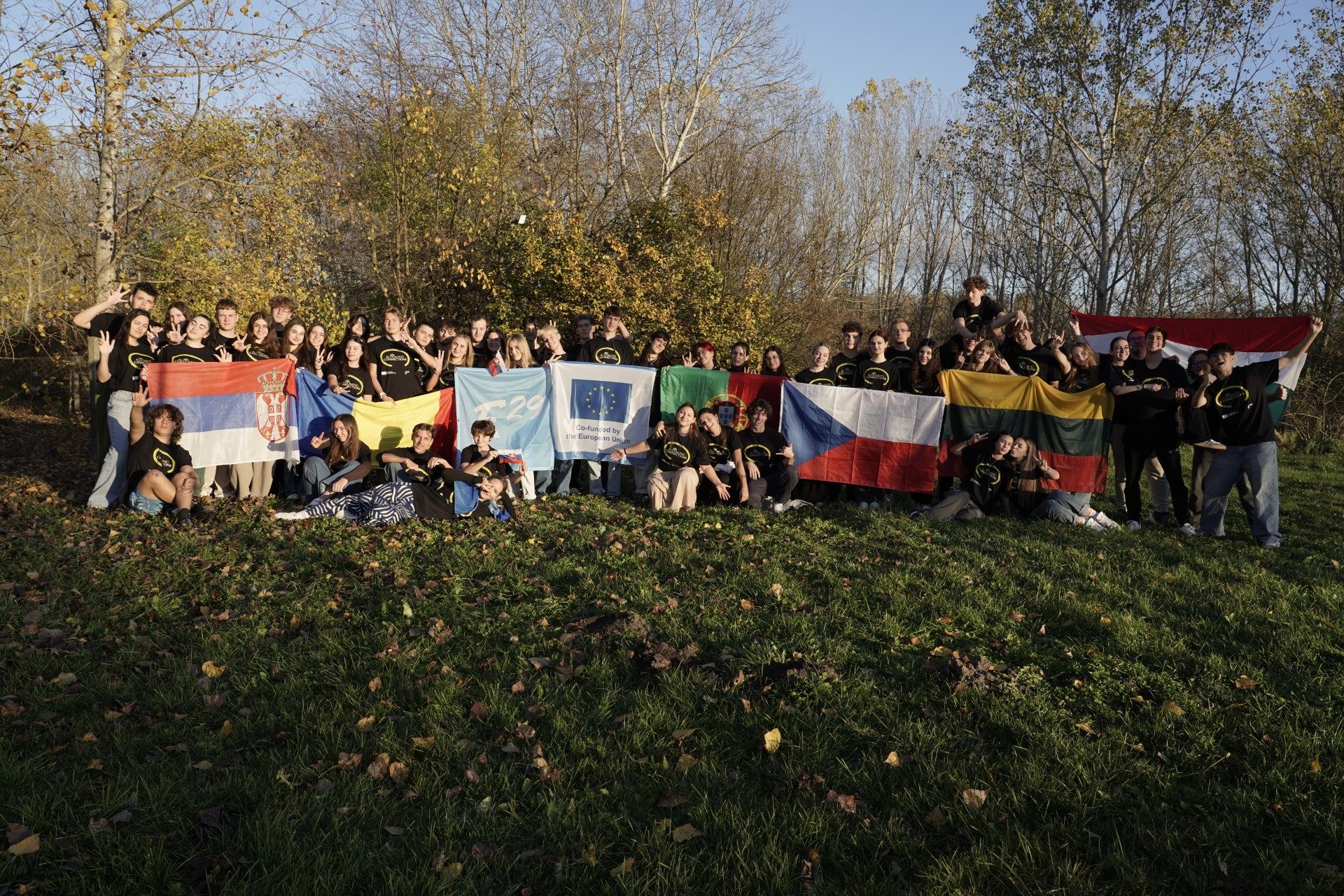
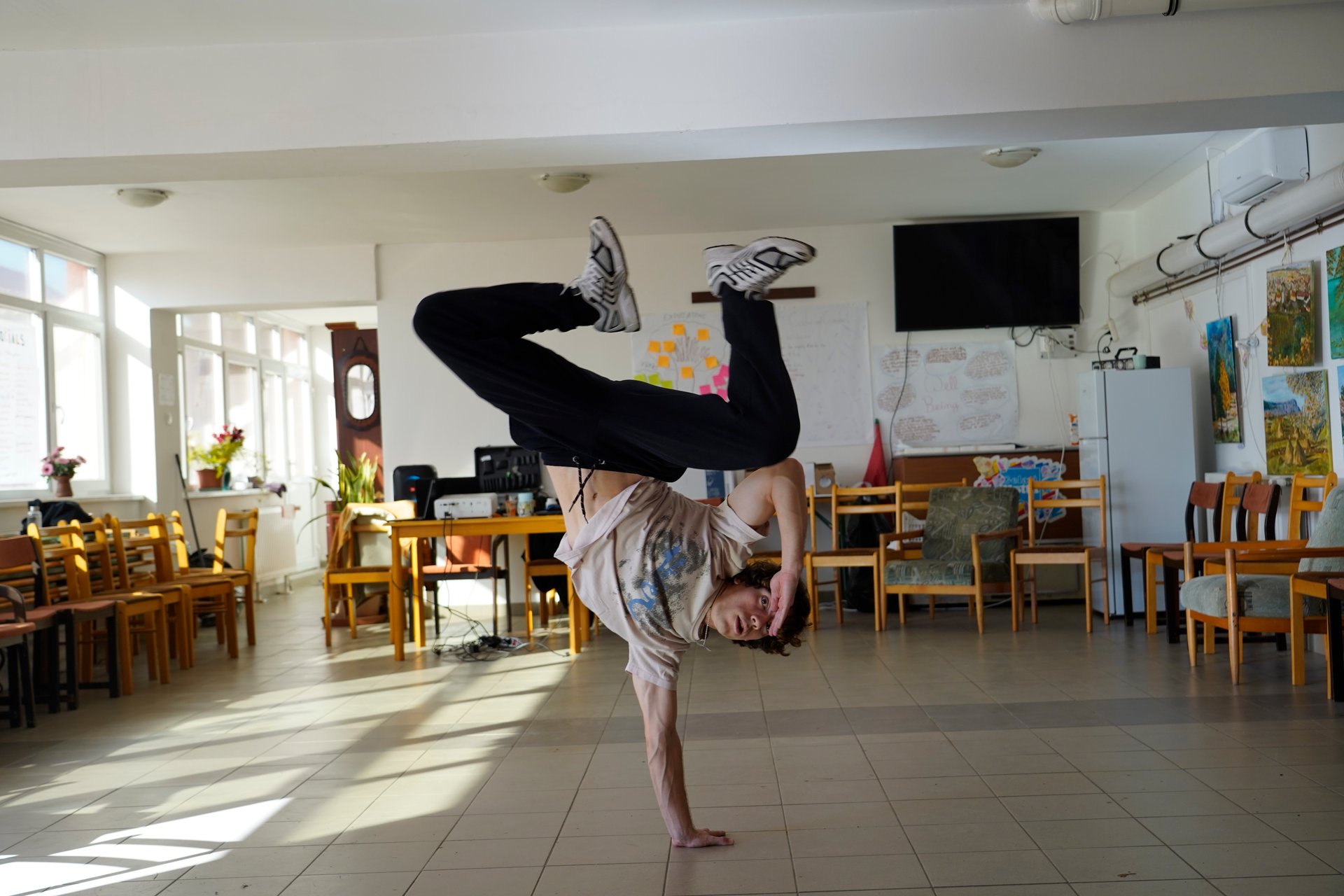
Check these and more photos in the activity’s photo album.